Pipeline Design
Part of CRM activity management
Separating completed activity from scheduled follow-up
A completed call and a planned follow-up describe different states. Keeping them separate lets a colleague see both the customer history and the work still owed.
A completed call and a planned follow-up describe different states. Keeping them separate lets a colleague see both the customer history and the work still owed.
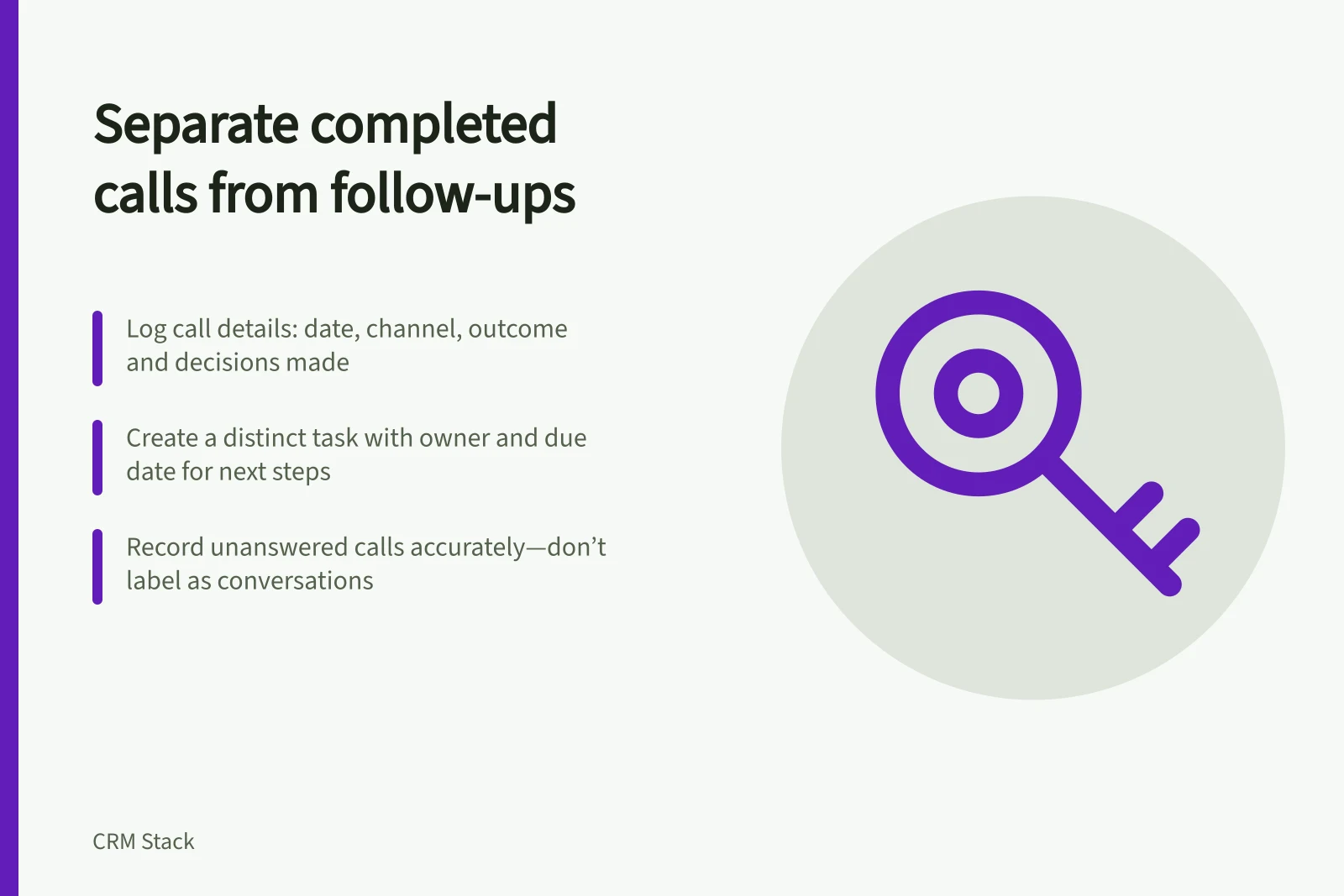
After an interaction, log what actually happened: date, channel, outcome and any material decision. Create a separate task for the next action, assigned to a named owner. “Called on Tuesday; customer asked for an implementation outline” belongs in the history. “Send implementation outline by Friday” belongs in the task list.
This distinction matters when a call was attempted but no one answered. Record the attempt accurately; do not describe it as a conversation. If the promised next step depends on another team, give that hand-off its own owner and due date. Identify who will update the customer.
Some CRMs let you create a follow-up task while logging an activity. Check the resulting task’s due date, assignee and related customer record. Creating it from the call screen does not prove it was assigned correctly or later completed. Conversely, ticking a task as complete should not imply that a promised customer outcome was achieved if the task only covered an internal step.
In a weekly review, look for recent meaningful interactions with no next action, and overdue tasks with no outcome recorded. That paired check is more useful than counting either calls or tasks in isolation.
Best Practice: Separating Completed Activity from Scheduled Follow-Up
- Log the completed interactionRecord date, channel, outcome, and any key decisions made during the call or meeting. Example: 'Called on Tuesday; customer asked for an implementation outline.'
- Create a separate follow-up taskSet up a new task with a clear action, due date, and assigned owner. Example: 'Send implementation outline by Friday' assigned to [Name].
- Avoid misrepresenting uncompleted actionsDo not mark a task as complete if it only covered an internal step. Ensure the actual customer outcome is verified before closure.
- Handle missed calls or hand-offs properlyIf no one answered, log the attempt accurately. For inter-team dependencies, assign ownership and set a follow-up date with a named updater.
- Review weekly for gapsCheck for recent interactions without next steps and overdue tasks without recorded outcomes. This paired review improves accountability.
Completed Activity vs. Scheduled Follow-Up
- Purpose
- Records what actually happened in a customer interaction
- Content
- Date, channel, outcome, decisions made, notes on customer feedback
- Ownership
- Logged by the team member who conducted the interaction
- Status
- Historical record – cannot be changed once logged
- Purpose
- Tracks work still required to progress the customer journey
- Content
- Clear action, due date, assigned owner, related contact/record
- Ownership
- Assigned to a specific person responsible for completion
- Status
- Active until marked complete; requires confirmation of real-world outcome